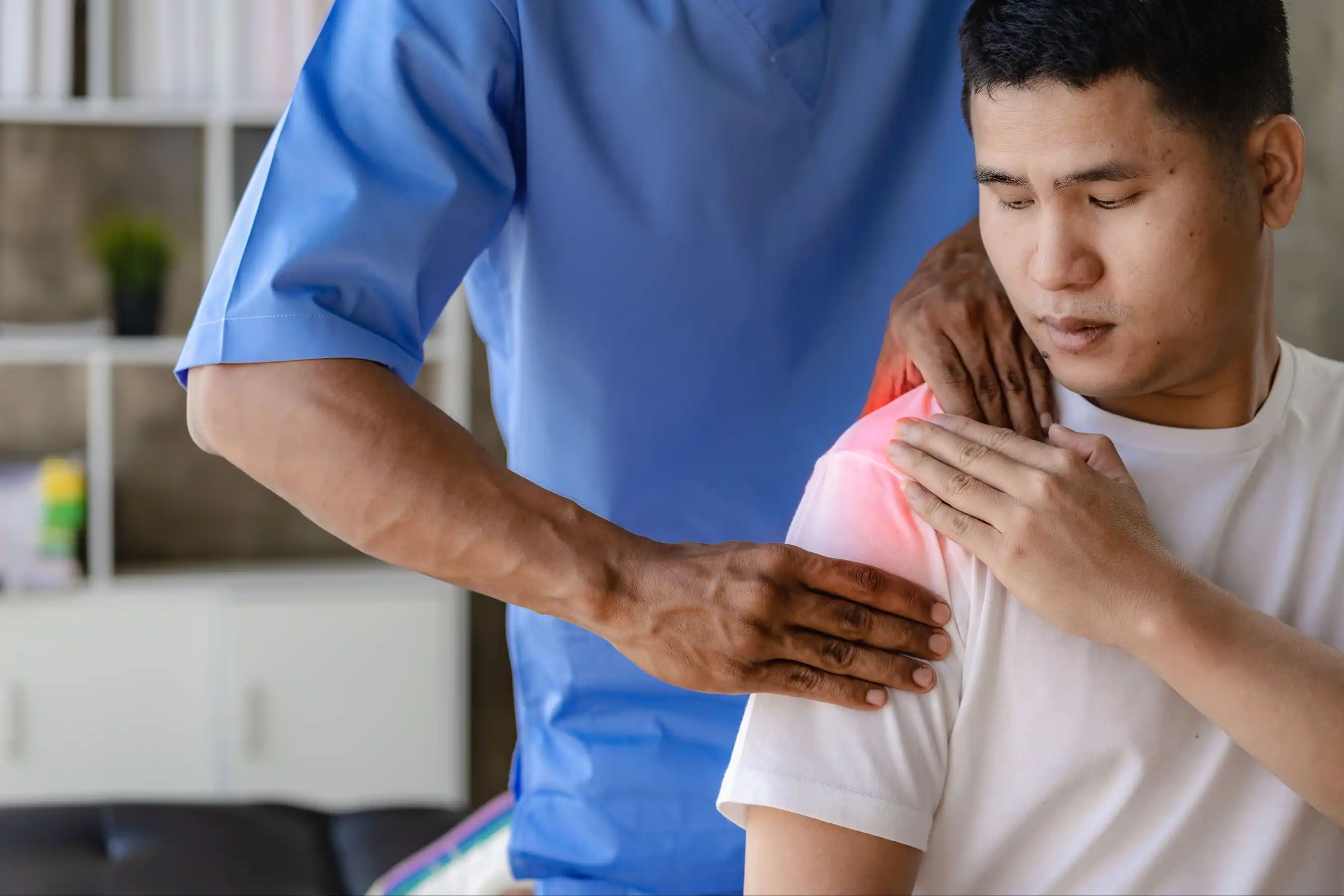
Key Takeaways
- A rotator cuff tendon cannot reattach itself to bone once it is torn, but many patients still recover strong shoulder function without surgery.
- Partial-thickness tears respond to nonsurgical care far more often than full-thickness tears, which usually involve a complete separation of the tendon.
- Tear size, patient age, activity level, and how long the injury has gone untreated all factor into whether conservative treatment is likely to succeed.
- Waiting too long to have a tear evaluated can allow it to enlarge, which narrows the nonsurgical treatment window.
- A same-visit shoulder exam is often enough to tell whether physical therapy and activity modification are realistic options for a specific tear.
- Dr. Michael Rytel, a board-certified, fellowship-trained orthopedic surgeon and sports medicine specialist, evaluates rotator cuff injuries at his Brackenridge and Shadyside offices, and patients throughout the Pittsburgh area can request an appointment online to get started.
Does a Rotator Cuff Tear Heal on Its Own?
Not completely, and this is one of the most common misconceptions patients bring into the exam room. The rotator cuff is a group of four tendons that stabilize the shoulder joint, and once one of them tears, it does not reattach to the bone without help. What can happen, however, is that the surrounding muscles and tendons compensate well enough that a patient regains most or all of their shoulder function without ever going under the knife.
That distinction matters. According to the American Academy of Orthopaedic Surgeons (AAOS), nonsurgical treatment relieves pain and restores function in roughly 80 to 85 percent of patients, and rotator cuff tears send almost 2 million people in the United States to the doctor every year. So while the tendon itself is not mending, a well-managed treatment plan can still get most patients back to daily activities and many sports without surgery.
Partial Tears vs. Full-Thickness Tears
Not every rotator cuff tear behaves the same way, and the type of tear plays a major role in whether nonsurgical treatment will work.
| Partial-Thickness Tear | Full-Thickness Tear | |
|---|---|---|
| What it means | The tendon is frayed or damaged but not completely severed | The tendon is torn all the way through, separating it from the bone |
| Typical symptoms | Dull ache, weakness with overhead motion, stiffness | Sharp pain, significant weakness, difficulty lifting the arm |
| Nonsurgical success | Often responds well to physical therapy and activity changes | Less likely to improve without intervention, especially in active patients |
| When surgery is more likely | If pain and weakness persist despite months of conservative care | Common in younger, active patients or those needing full overhead strength |
Factors That Affect Healing and Recovery
Whether a rotator cuff injury responds to nonsurgical treatment depends on more than just the size of the tear. Dr. Rytel evaluates several factors before recommending a treatment path:
- Tear size and location. Smaller, partial tears generally have more nonsurgical options than large or full-thickness tears.
- Patient age and activity level. Younger, more active patients or those who rely on overhead arm strength for work or sports are more likely to need surgical repair.
- Symptom duration. Tears that have been symptomatic for a long time are less likely to respond to conservative care alone.
- Response to initial treatment. If physical therapy, anti-inflammatory medication, and activity modification do not improve symptoms within a reasonable window, surgery becomes a more realistic conversation.
Risks of Delaying Treatment
Putting off an evaluation is one of the most common reasons a manageable rotator cuff tear becomes a surgical one. Per the Cleveland Clinic, risk for a rotator cuff tear increases with age, and pain that worsens at night or interferes with sleep is a signal that the injury needs medical attention rather than a wait-and-see approach. Left untreated, a partial tear can enlarge over time, weakness can worsen, and the shoulder can lose range of motion that becomes harder to recover.
Rotator Cuff Surgery Alternatives
For patients who are good candidates for nonsurgical care, Dr. Rytel's sports medicine program includes a range of treatment options before surgery is ever discussed:
- Structured physical therapy to strengthen the surrounding shoulder muscles
- Activity modification to reduce strain on the injured tendon
- Anti-inflammatory medication to manage pain and swelling
- Orthobiologic injections, such as PRP, for patients who may benefit from an added healing boost
When Professional Evaluation Is Needed
Not every shoulder ache requires an immediate appointment, but certain symptoms are worth having checked by a sports medicine specialist rather than managed at home:
- Shoulder weakness that makes it hard to lift the arm overhead
- Pain that disrupts sleep or worsens at night
- A popping or catching sensation with shoulder movement
- Symptoms that have not improved after a week or two of rest
Get Your Shoulder Evaluated Before Deciding on Surgery
A rotator cuff tear does not have to mean an automatic trip to the operating room, but figuring out which path is right requires an accurate diagnosis. Dr. Rytel's individualized approach to sports medicine helps patients understand exactly what their tear looks like and what treatment options make sense for their goals.
If shoulder pain, weakness, or stiffness has been holding you back, request an appointment with Dr. Rytel at either the Brackenridge or Shadyside office, or call (412) 661-5500 to schedule a rotator cuff evaluation.
Frequently Asked Questions
Can a torn rotator cuff heal without surgery?
The tendon itself will not reattach on its own, but many patients regain strong, pain-free shoulder function through physical therapy and other nonsurgical treatment, particularly with partial tears.
Can a rotator cuff heal naturally over time?
No, once the tendon fibers are torn, they cannot naturally reattach to bone. What can improve naturally, with the right rehabilitation, is shoulder strength and function around the injury.
What are the risks of delaying rotator cuff treatment?
Delaying care can allow a partial tear to enlarge, increase weakness and stiffness, and reduce the likelihood that nonsurgical treatment will still be effective by the time a patient is evaluated.
How do I find a rotator cuff specialist near me?
Patients throughout Brackenridge, Shadyside, and the greater Pittsburgh area can schedule a shoulder evaluation directly with Dr. Rytel to determine the most appropriate treatment path for their specific tear.